

Davey Hiott: Another S.C. State House Nepotism Scandal?
July 17, 2026Are Outside Forces Attempting to Transform South Carolina?
“Community organizing has evolved into its own cottage industry…”
W
hile the federal election results have gotten the headlines, I believe it’s vital to understand what’s happening at our state level of government. The fact ten South Carolina State House seats flipped to the Democrats was astonishing – but to me what is even more incredible is to see the Democrat Party go from 34 candidates running for State House in 2024 to finding candidates to run in all 124 State House races in 2026. That is an extraordinary achievement in a very short period of time!
How did they do it? Was this organic, or was it organized? There has been much discussion about the reasons for South Carolina’s election night results, and while the answer is of course multi-faceted, one important aspect has not been part of the debrief discussion.
I first heard of the job title “Community Organizer” around the time of Barack Obama’s 2008 presidential win. Who knew that was a thing? It turns out community organizing (uniting and building collective power to advocate for systemic change and influence decision makers) is much more widespread, and structured, than I would have ever guessed. With its roots in the Labor and Civil Rights movements, community organizing (or “base building”) has now evolved into its own cottage industry, complete with college degrees on the subject.
As an example, the Claremont Lincoln University website says the following regarding employment in community organizing for their graduates:
“… an organizer working for a nonprofit organization may be responsible for healthcare or social justice advocacy or education outreach. Whereas an organizer employed by a school may recruit and train students interested in specific causes.”
Stay Connected!
How much community organizing is impacting politics in South Carolina and who might be funding it is hard to know, but I do have the following example from personal experience.
The second time I came across the phrase “community organizer” was when I launched the Mom and Pop Alliance of SC in 2020. A gentleman named Frank Knapp, who founded the S.C. Small Business Chamber of Commerce, called me to say there was no need to launch a new small business educational organization, as he had already been working to help small businesses for over twenty years. I told him that was great but went on to say that with over 400,000 small businesses in our state, I believed having multiple groups was a good thing.
After this unexpected call I began to research Knapp. I learned that he and David Levine launched the American Sustainable Business Network (ASBN) and have worked closely for years. Levine now works as a “social entrepreneur” and is “working toward an equitable and sustainable economy, particularly by changing the rules of the game.” Together, Knapp and Levine have long championed inclusivity and equity as enduring principles. Believing that bold changes must be made to protect American democracy they recently launched another organization in multiple states: Business for Democracy.
In a 2021 interview, Levine explained how decades earlier, at the age of nineteen, he dropped out of college after responding to a flier offering $80/month plus room and board to become a full-time community organizer (one must wonder where the money came from to fund this program). Furthermore, when asked in a 2024 article, “Is there a particular person who you are grateful toward who helped get you to where you are?” Levine’s reply was, “…in my community organizing work, it was Saul Alinsky.” Now remember, Levine is the partner of the man who has been running the Small Business Chamber for over twenty years in the Palmetto State!
The Influence of Community Organizing
F
or those who may not know, Saul Alinsky (Chicago, 1909-1972) is widely recognized as the father of Community Organizing and considered an inspiration for the Occupy Movement as well as climate action. His famous book Rules for Radicals outlines power dynamics and how to apply pressure on opponents including the use of ridicule, bluffing of strength, as well as identifying and damaging personal targets.
One should take note of the quote on the first page of Alinsky’s guide for the Left:
“Lest we forget at least an over-the-shoulder acknowledgement to the very first radical……the first radical known to man who rebelled against the establishment and did it so effectively that he at least won his own kingdom—Lucifer.”
Drawing from the Behavioral and Social Sciences and over 100 years of organizing experience, as well as sophisticated training (including the use of agitation), savvy online messaging and digital marketing (or digital organizing), and the help of numerous dedicated non-profits, the Left developed the capability to deploy sophisticated tactics and strategic planning for, in their words, “revolutionary change.” Aside from Obama, there’s a very long list of well-known community organizers such as congresswoman Ilhan Omar, mayor Karen Bass, and Georgia’s Stacey Abrams, founder of Fair Fight Action and Fair Count.
Also on this list is NYC Mayor Zohran Mamdani, who after college spent some time with Change Corps where you “learn and master the practice of making change.” Their website states, “(o)ur graduates have the training and experience necessary to work at some of the nation’s top social change organizations,” such as MoveOn, Planned Parenthood, Jobs with Justice, Everytown for Gun Safety, and many others. Change Corps offers hands-on experience to help overcome obstacles to change, be it a corporation or “people whose views haven’t caught up with the times.”
So, how active is community organizing in South Carolina? It’s hard to say, since most of it is behind the scenes.




THE REACH OF PROGRESSIVE ORGANIZING

One of Indivisible’s many initiatives.
I
n addition to an organized Democrat Party infrastructure, progressives also have an active organizing arm, Indivisible. Here, one can easily find a group to plug into anywhere in the country. In South Carolina there are many active Indivisible groups operating throughout the state, featuring weekly events and local Facebook pages with tens of thousands of followers who are drawn to the language “grounded in solidarity and empathy we build coalitions for social justice, monitor and confront authoritarian government initiatives, and mobilize individuals to speak out and take action.”
Of course, Republicans and those on the right have their organizations, think tanks, and training seminars, but nothing as consistent, far reaching, or as structured as this.
I can’t help but wonder to what extent out-of-state resources, influencers, and HIGHLY TRAINED professionals are working quietly in this state and other red states. I don’t believe community organizing for votes like this was what our Founders had in mind when they devised our system, but citizens need to be aware that this the world they now live in.
Will the South Carolina Republican Party and citizens of the Palmetto State who lean to the right put in the effort necessary to actively compete in this new world? Time will tell.
***
ABOUT THE AUTHOR…
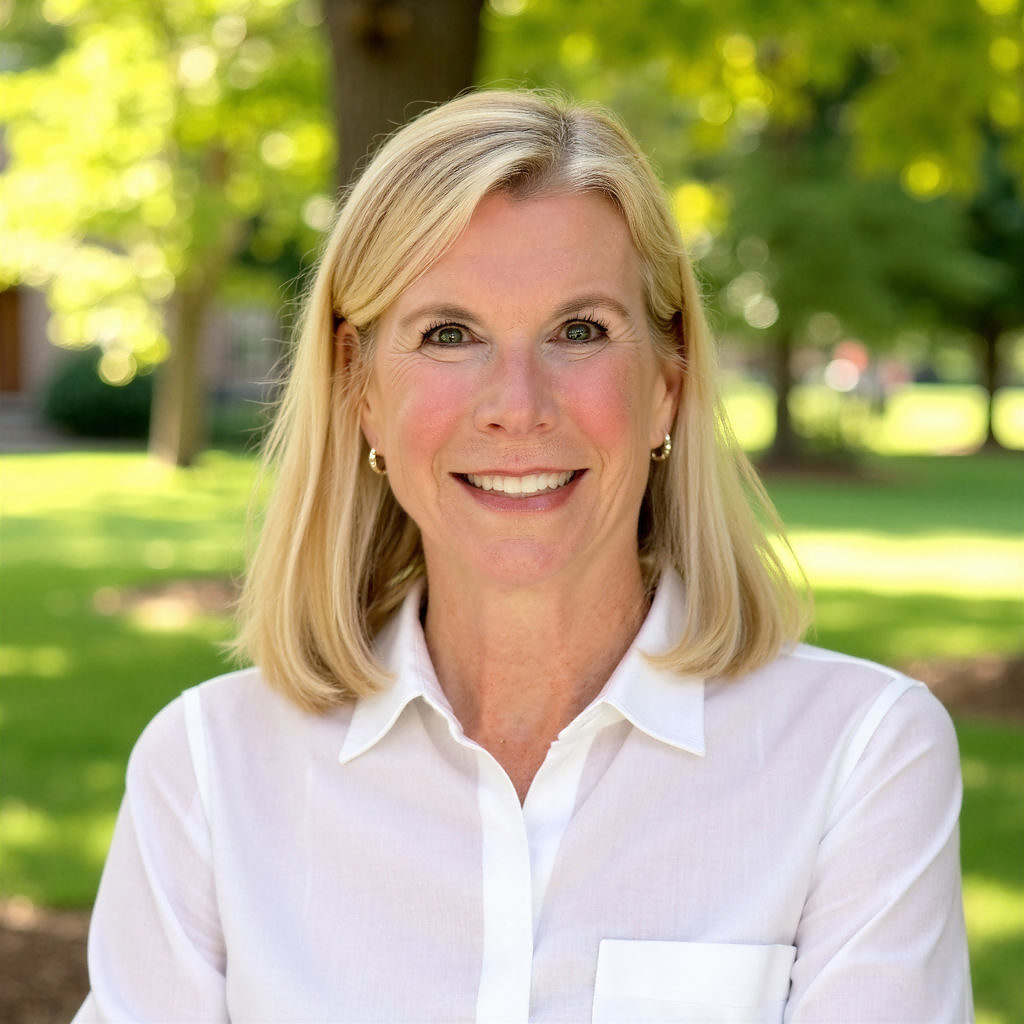
Diane Hardy is a former nurse anesthetist turned entrepreneur, who (along with her business partner) recently opened her second franchise bakery in Greenville. She is the Executive Director of the Mom and Pop Alliance of SC, which she founded during Covid upon discovering South Carolina’s over 400,000 small businesses had little representation in our State House. The Alliance provides education, communication, and advocacy for SC’s family-owned businesses.
Her passion for South Carolina’s small business is strong, and as such she donates her time to the organization, accepting no salary or government funding. Her love for our state isn’t new. Before launching the Mom and Pop Alliance she was the founder and host of The Palmetto Panel (2014-2019), an annual statewide conference highlighting issues impacting South Carolina. Diane has a bachelor’s degree in nursing and psychology from Michigan State as well as a master’s degree from MUSC.