
SC Small Businesses Deserve this Break
January 9, 2026
South Carolina’s ‘Sweetheart Deals’ are Starting to Sour
June 17, 2026Cutting Through the Confusion on S.C.’s New Income Tax Bill
South Carolina’s tax rules are shifting with temporary relief before concerning changes in 2026.
Y
ou’re probably hearing all kinds of things regarding changes to South Carolina’s income tax law included in H. 4216, a bill on its way to the governor’s desk.
Among them:
- South Carolina is conforming with the One Big Beautiful Bill (OBBB)’s no-tax-on-tips/overtime.
- South Carolina is not conforming with Trump’s OBBB.
- We are heading to an income tax rate of zero.
- H. 4216 cuts your taxes.
- 25% of filers will see their taxes increase.
- Low-income earners will pay more, and high-income earners will pay less.
- South Carolina’s income tax rate will be 1.99% in five years.



Stay Connected!
SO, WHAT IS THE REAL STORY?
T
he future of South Carolina’s proposed income tax rules has been in a constant state of flux for over a year. We at the Mom and Pop Alliance of SC have been doing our best to keep our members informed about the latest with regard to the Palmetto State’s new income tax bill and what it will mean for all South Carolinians. It’s a complex topic which we’re striving to simplify as best we can. Here is our big-picture overview.
When H. 4216 was originally introduced in the S.C. House last year, we and many others had concerns. We explained that decoupling from the federal tax code – with the corresponding loss of many federal deductions (including the $30,000 standard deduction) would have catastrophic effects for many, especially low-income earners.
Fortunately, the State House heard these objections and made some changes to H. 4216, making it somewhat more friendly to taxpayers. But there is no getting around the truth: even with the improvements to H. 4216, approximately 25% of filers will see their taxes increase.
So where are we today? After much howling from the grassroots, our legislature passed H. 3368, which allows our state to conform with the federal tax code – but for 2025 only. South Carolina will enjoy all the federal deductions, and we will conform to the One Big Beautiful Bill (OBBB) – including its no-tax-on-tips/overtime provisions. But the changes are in effect for 2025 only, while in 2026 everything shifts again when H. 4216 takes effect.
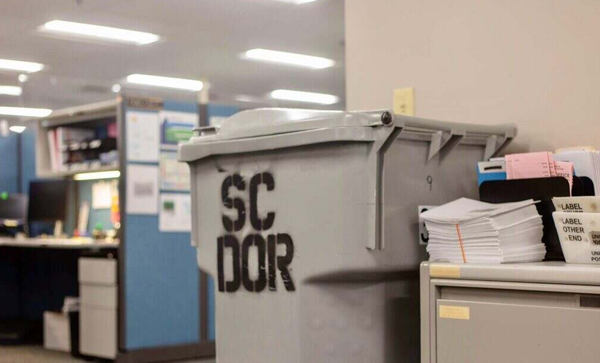
A recycling bin at the S.C. Department of Revenue. (SCDOR)
WHAT’S IN STORE FOR 2026 AND BEYOND
W
hile the stated goal of the bill is to lower taxes and flatten our rate, the amended version of H. 4216, which outlines state income tax policy for 2026 and beyond, is much more complex. South Carolina has historically followed the federal rules regarding taxes, but not all states do – so it would not be unheard of to decouple from the federal standard.
It is true that flattening the rate does increase taxes on some (mainly lower-income earners), but there is an argument to be made that a flatter tax is a good thing – as everyone should pay something so we all have “skin in the game.” Otherwise, there is a risk that those who pay no income taxes at all would always support tax increases since they would never be impacted directly. Opponents of instituting a flat tax in South Carolina argue it is not right to raise taxes on low-income earners, especially given our recent inflation and affordability issues.
Achieving the second part of the stated goal (lowering the tax rate) is not so clear cut. H. 4216 does lower the rate to 5.21% but with the concomitant loss of many exemptions. It would depend on individual circumstances whether one would pay less income taxes overall. Furthermore, H. 4216 permanently decouples SC from the federal tax code which means 2025 is the only year that your state income tax calculations could claim the deductions and perks laid out in Trump’s OBBB.

Mom and Pop Alliance of SC
THE SPIN MACHINE IS IN OVERDRIVE
W
hether H. 4216 is a net positive for South Carolina remains to be seen. Getting to a lower, flatter rate is a good thing, but we think proponents of H. 4216 (including many conservative think tanks and tax policy centers) are spinning the legislation as something better than it is. We earnestly hope we are proven wrong, but their claims of a state income tax rate of 1.99% in five years, or of a zero percent tax rate in the future, are wishful thinking at best and disingenuous at worst, even though the headlines sure do sound great!
They admit certain “conditions” must be met to get to an income tax rate of zero, but what exactly are those conditions? It turns out that after the passage of H. 4216 many of us may not live to see the proudly touted zero tax rate. By some people’s estimates, H. 4216 would lower our income tax rate by approximately 0.2% annually, if and only if South Carolina’s individual tax revenue growth is over 5%, AND if SC also has $500 million in its reserve fund.
Let’s start with looking at the first part. South Carolina would need to have 5% annual individual tax revenue growth to enjoy an estimated incremental 0.2% reduction. Therefore, we would need to sustain that level of growth for 26 years straight to get our current 5.21% income tax rate to zero!
Given that the economy is typically cyclical, and natural disasters, recessions, and economic shocks occur on a regular basis, how likely is it for South Carolina to have 26 straight years of strong GDP growth? If recent history is any guide, the likelihood of our state having 5% GDP growth in any given year is a little under 50%. Since it’s likely that at least half of the years will not reach the threshold, it could take fifty years at a 0.2% annual decrease for us to reach zero – and that doesn’t even include the second condition regarding the reserve fund.
So, for us, any talk of a 0% tax rate is clearly premature and not realistic! That is why from the beginning the Mom and Pop Alliance has been saying that it was more accurate to call this new law a tax “change” and not necessarily a tax “cut.”
We are still not sure how we get to a 1.99% rate in 5 years which is being touted by some, but we are happy to learn how this could be realistically accomplished.
LOWERING SPENDING
While there is an argument to be made for a lower, flatter tax, the claims of this new law getting our state to a tax rate of zero or even 1.99% are overblown, and the spin machine on this type of rhetoric, in our opinion, needs to stop.
To make matters worse, this year’s proposed budget is 8% higher than last year’s budget. Clearly, the best way to genuinely lower taxes is to lower our spending. Perhaps looking at our 5 overlapping economic development agencies would be a good place to start. At the Mom and Pop Alliance, we believe a vast majority of South Carolinians want honest answers, (not hype), decreased spending, and a renewed emphasis on core functions of government.
***
ABOUT THE AUTHOR…
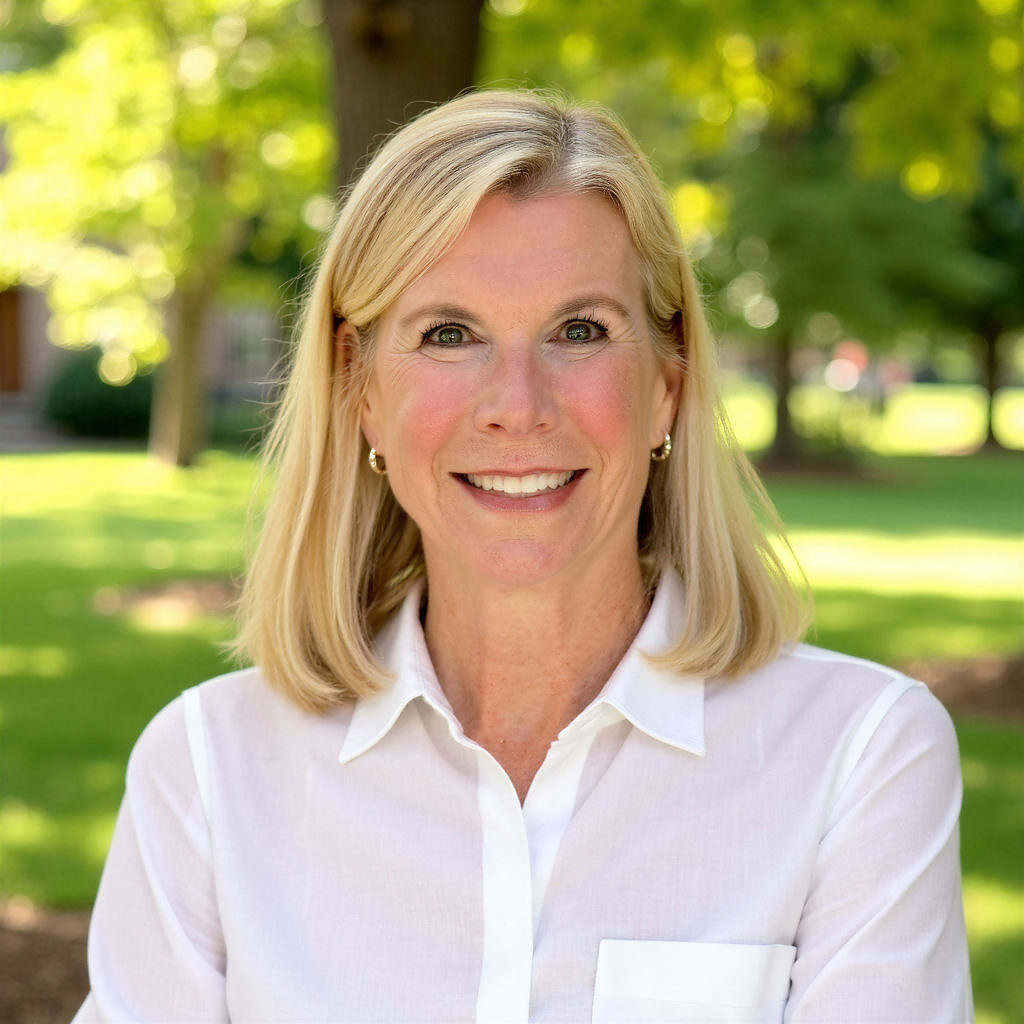
Diane Hardy is a former nurse anesthetist turned entrepreneur, who (along with her business partner) recently opened her second franchise bakery in Greenville. She is the Executive Director of the Mom and Pop Alliance of SC, which she founded during Covid upon discovering South Carolina’s over 400,000 small businesses had little representation in our State House. The Alliance provides education, communication, and advocacy for SC’s family-owned businesses.
Her passion for South Carolina’s small business is strong, and as such she donates her time to the organization, accepting no salary or government funding. Her love for our state isn’t new. Before launching the Mom and Pop Alliance she was the founder and host of The Palmetto Panel (2014-2019), an annual statewide conference highlighting issues impacting South Carolina. Diane has a bachelor’s degree in nursing and psychology from Michigan State as well as a master’s degree from MUSC.